

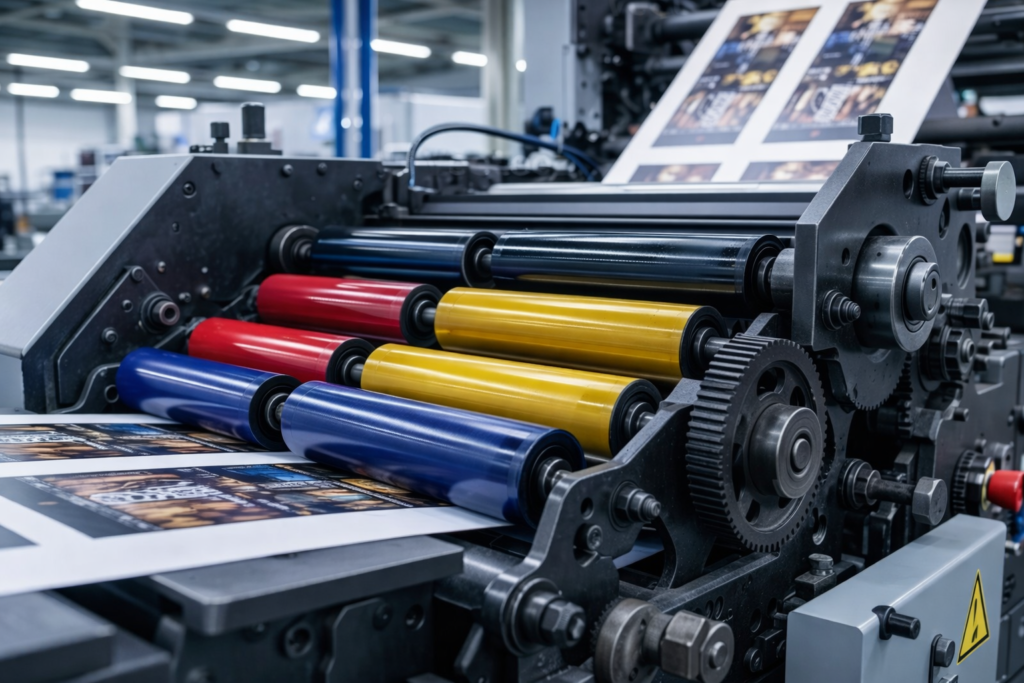
The Power of Offset Printing
For brands aiming to make a strong visual impact, offset printing offers an efficient and superior way to reproduce printed items. At Agha Jee Printers, we rely on this time, tested technology because it delivers the vibrant, skilled results your marketing materials and packaging demand. This post explores the benefits, methods, and applications of offset printing (or offset lithography), showing you why it remains the ideal choice for your company’s high-quality needs.
Understanding Offset Printing: What It Is and How It Works
Offset printing, also known as offset lithography, is a widely respected commercial printing technology. It offers exceptional accuracy and refined quality for various printing needs. We use modern commercial presses to manage this intricate process with precision.
Here is how the magic happens: the inked image transfers from a durable metal plate to a flexible rubber blanket. Next, the blanket presses the image onto the final printing surface, your paper or board. This indirect process ensures unmatched print quality because the plate itself never touches the paper. The careful coordination between the plates and blankets guarantees high-quality prints every single time. The outcome? Perfect detail, vibrant colors, and excellent prints that significantly enhance any material’s visual identity.
Top Benefits of Lithography Offset Printing at Agha Jee Printers
Choosing offset printing machines means partnering with a leader in the printing industry. It guarantees exceptional quality and remarkable efficiency for your projects. For your next project, the offset printing press is the best option for several key reasons:
Unrivaled Print Clarity
The results from an offset printing press are crisp and clear. Because the method avoids direct contact between the plate and the paper, it ensures better image quality. Ink transfers from the plate to the rubber blanket, and then the blanket applies it to the substrate for a flawless finish.
Affordable Printing for High Volumes
Lithography, another name for offset printing, proves most cost-effective when you need large quantities. While sheetfed presses may have higher initial setup costs because we must create custom plates, the cost per unit decreases significantly once the setup completes. Therefore, the offset printing process is perfect for businesses requiring high-volume prints, such as large direct mail campaigns, brochures, and catalogs. This cost efficiency in the press stage is a major benefit.
Endless Material Possibilities
One of the key advantages of litho offset printing is its ability to handle a wide variety of paper types, including different weights and widths. Lithographic printing presses manage specialty materials like metallic or textured papers with ease. This flexibility allows designers and companies to select premium paper options that align perfectly with their brand image. Unlike digital printing, which often has fewer paper alternatives, offset printers work well with various substrate materials and support special inks like metallic, fluorescent, or specific Pantone colors for unique effects.
Fast-Track Production for Quick Turnarounds
Once the initial setup is complete, offset printing delivers high volumes fast. The process operates at impressive speeds, outperforming other printing methods in sheer output efficiency. This speed makes it perfect for jobs that involve a lot of work and have short deadlines.
Consistent Prints for Large-Scale Projects
Offset printing, also known as sheet-fed printing when using individual sheets, requires creating plates for each design. This process ensures precise and consistent results for every single print run. However, because each variation needs a separate plate, offset presses are less ideal for variable data or highly personalized projects. For large-scale projects that require uniformity, this printing method remains the best option.
Applications Where Offset Printing Excels
Offset plate printing is a vital technique that supports many industries. Understanding this printing helps you make informed decisions for your projects, whether in marketing, publishing, or packaging.
- Business Cards: Offset lithographic printing transforms business cards into professional pieces that leave a lasting impression. It captures every detail with precision, ensuring clarity and impact.
- Brochures: Offset printing breathes new life into brochures, turning your company’s message into an impactful narrative. It ensures reliable color reproduction for consistent, high-quality results that stand out.
- Catalogs: With offset-printed catalogs, you present detailed and captivating representations of your products. The clear, readable text enhances effectiveness, making each catalog a powerful marketing tool.
- Packaging: In the packaging industry, offset printing excels at creating eye-catching designs for everything from large electronics boxes to small cosmetics packaging. It captures every detail with precision, ensuring a memorable first impression. Custom printed boxes boost your brand’s appeal across various industries.
- Stationery: Offset printing transforms everyday stationery like letterheads and envelopes into branded essentials. It showcases your company’s professionalism and attention to detail with clarity and vibrancy.
- Posters and Magazines: For large quantities, offset printing provides publishers with cost-effectiveness and crisp, detailed quality. This high-quality printing enhances reader satisfaction and ensures posters have brilliant colors and sharp images.
Potential Drawbacks to Consider
While offset printing is powerful, you should know its limitations:
- Setup Time and Cost: Preparing printing plates is a necessary step that makes the process time-consuming and involves higher initial costs. This makes it less ideal for very small production runs.
- Variable Data Limitations: Because each design variation requires a new plate, offset presses are not efficient for projects needing personalized or changing information on every piece.
- Environmental Considerations: The process uses chemicals, so proper handling and disposal are important to minimize environmental impact.
Offset printing blends traditional artistry with modern technology. It offers a proven solution for all your high-quality printing needs, ensuring consistent, reliable results for marketing materials, packaging, and more.
FAQs About Offset Printing
Q: What is the main difference between offset printing and digital printing?
A: Offset printing uses physical plates to transfer ink, making it ideal for large, high-quality runs where cost-per-unit drops significantly. Digital printing prints directly from a file, making it better for short runs and personalization because it skips the plate-making process.
Q: Why is offset printing considered cost-effective?
A: While the initial setup—creating plates and calibrating the press—has a cost, that expense is spread across thousands of printed items. This means the cost for each individual brochure, box, or business card becomes much lower than with digital printing for large quantities.
Q: Can offset printing handle special colors like my brand’s logo color?
A: Yes. Offset printers can use the entire Pantone color palette, including metallic and fluorescent inks. This allows for precise color matching, which is essential for maintaining consistent brand identity across all your printed materials.
Q: Does offset printing work on different types of paper?
A: Offset printing is very versatile with materials. It handles a wide variety of paper types, weights, and textures, including heavy cardstocks and specialty papers, giving you more creative flexibility than many digital methods.
Q: Is offset printing slower than digital printing?
A: The setup phase for offset printing takes longer because of plate creation. However, once the press is running, it operates at very high speeds, allowing it to produce large volumes much faster than digital printing can for the same quantity.
Q: Is offset printing suitable for printing custom printed boxes?
A: Absolutely. Offset printing excels at creating the eye-catching designs needed for packaging. It captures fine details and vibrant colors, ensuring your custom printed boxes stand out on the shelf.